

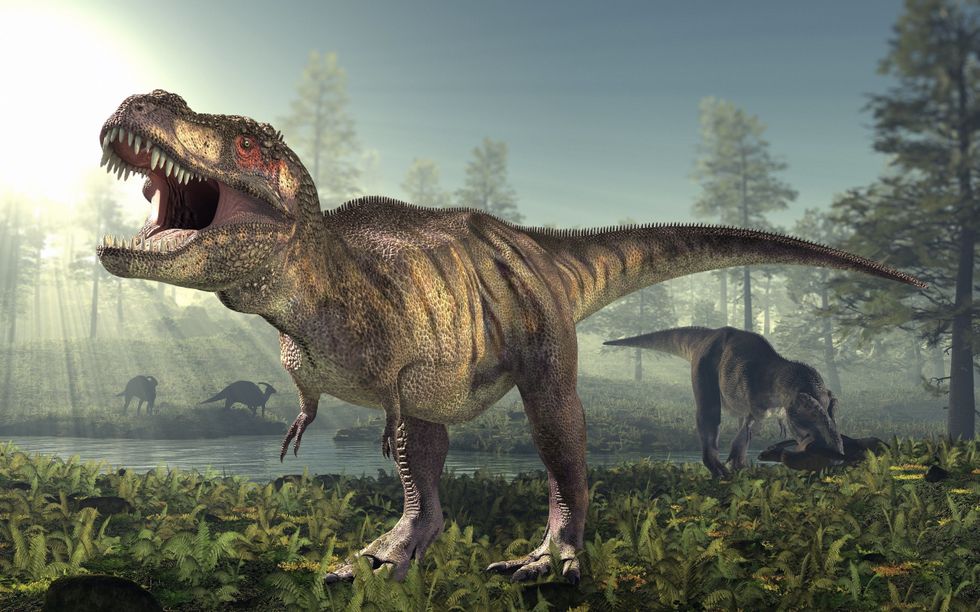
Groundbreaking analysis of Tyrannosaurus rex footprints show the fearsome predator may have moved up to 20 per cent more quickly than previously thought.
Scientists believe the dinosaur moved in a ‘toes-first’ style, comparable to a modern bird or a human sprinter.
Previous studies suggested that T. rex was primarily a heel-striker, with the rear of the foot contacting the ground first during walking
But new stride pattern analysis show them to have more in common with modern birds, meaning “higher stride frequencies” and “elevated speeds”.
Scientists believe they moved in an elegant manner which utilised the distal, or forward, part of their foot towards the end of their large central toe.
The study notes this technique is more similar to “birds and human athletes”.
A small T.rex, which would still weigh about 1.4 tonnes, could move up at up to 11.4 metres per second (m/s), allowing it to run 100 metres in 8.77 seconds.
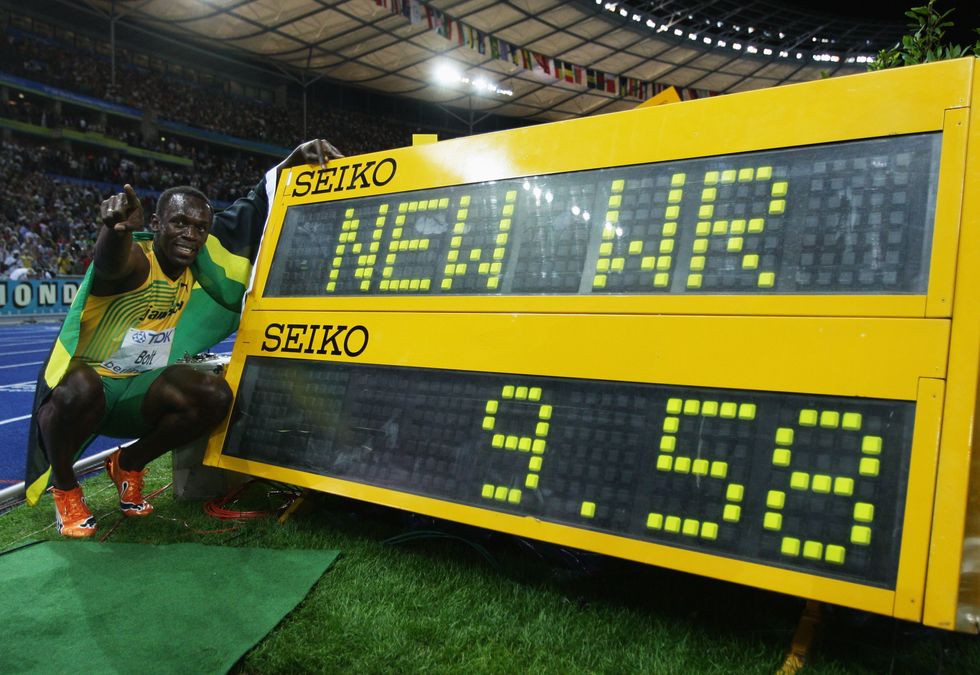
Such a pace is almost a second quicker than Usain Bolt’s 100 metre world record of 9.58 seconds.
The Jamaican sprinter attainted a 10.44 m/s average speed during his record breaking run and peaked at 12.42 m/s.
A bigger T.rex, weighing around 6.5 tonnes, would struggle to match the world record pace set by Bolt in 2009.
The study, which was published in the journal Royal Society Open Science, found that larger dinosaurs would likely cover 100 metres in a more modest 10.52 seconds, moving at 9.5 metres a second.
“Rather than stomping heel first, the Tyrannosaurus rex might have taken shorter, toe-first steps”, the Royal Society said.
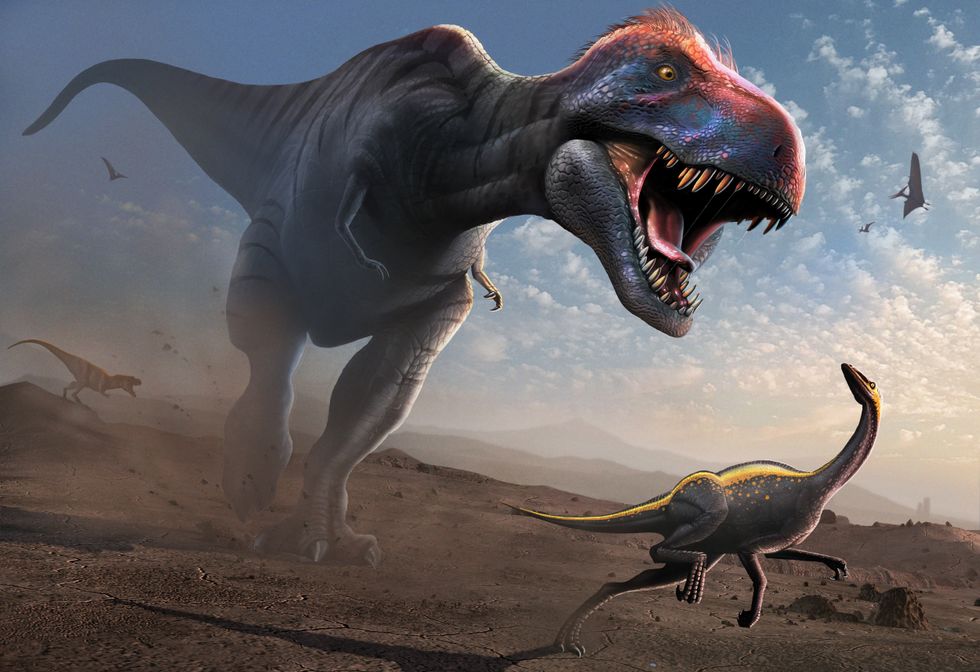
“Foot-strike analysis based on T. rex anatomy, tracks and modern bird locomotion suggests the tip of its toes struck the ground first, contrary to previous theories. This would also suggest the dinosaur moved on average 20 per cent faster than previously believed.”
The authors added: “Our study represents, to our knowledge, the first quantitative biomechanical analysis of the effects of foot-strike patterns on the gait of Tyrannosaurus.”
A separate study, published in 2024, suggests the T. rex may have been 70 per cent heavier than previously thought - weighing a hefty 15 tonnes.
One of the study’s authors, Dr Jordan Mallon, said: “Our study suggests that, for big fossil animals like T. Rex, we really have no idea from the fossil record about the absolute sizes they might have reached.
LATEST DEVELOPMENTS
- Veteran Nasa engineer declares aliens are REAL - but have yet to reach Earth
- Scientists identify ancient crocodile that settled in Britain 200 million years ago
- Unmissable rare space phenomenon will see SIX planets align this week over Britain
“It’s fun to think about a 15 tonne T. Rex, but the implications are also interesting from a biomechanical or ecological perspective.”
The T.rex may have also boasted iron-coated teeth to help them rip apart their prey, according to another study.
The serrated edges of Komodo dragons’ teeth are tipped with iron, which primes them for tearing into food.
Our Standards: The GB News Editorial Charter
from GB News https://ift.tt/uQxEmZ8
via IFTTT


Thank you for your message!